
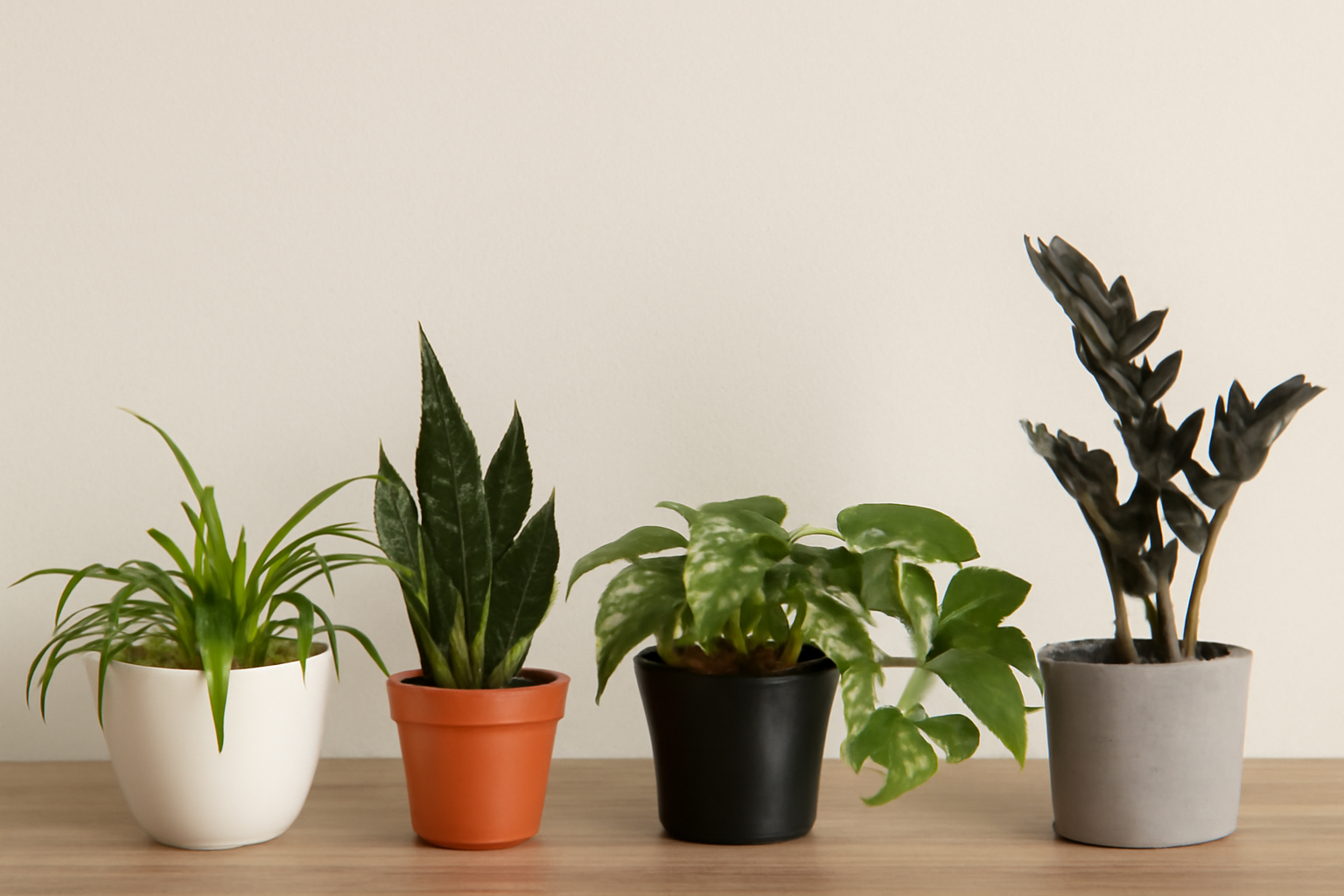
Getting started with gardening doesn’t mean you have to be an expert. In fact, many people begin with houseplants that are not only beautiful but also extremely easy to care for. If you’re new to the world of plants, the key is choosing species that don’t require a strict routine or specialized care.
The following five plants are ideal for beginners because they are resilient, low-maintenance, and adaptable. Whether you live in a small apartment with limited light or a larger space with room for greenery, these plants can thrive in a variety of conditions.
1. Snake Plant (Sansevieria)
The snake plant is one of the most forgiving houseplants you can own. Its long, upright leaves with green and yellow variegation give any space a modern and structured look.
Why It’s Perfect for Beginners
- Requires very little water.
- Tolerates low, medium, or bright indirect light.
- Grows slowly, so it doesn’t need frequent repotting.
- Has air-purifying properties, making indoor air cleaner.
How to Take Care of a Snake Plant
- Lighting: It can survive in dim corners but grows faster in bright, indirect light.
- Watering: Water approximately every 2–3 weeks. Wait until the soil is completely dry before watering again.
- Soil: Use a cactus or succulent soil mix for proper drainage.
Additional Tips
- Wipe leaves to remove dust every few weeks.
- Avoid overwatering—this is the main reason snake plants fail.
- Place it in bedrooms or offices for a sleek touch and clean air.
2. Golden Pothos (Epipremnum aureum)
Golden pothos, sometimes just called pothos or devil’s ivy, is known for its long, trailing vines and green leaves with yellow or white streaks. It’s one of the easiest plants to grow indoors.
Why You’ll Love It
- Extremely adaptable to different environments.
- Can survive in low light, though it prefers brighter conditions.
- Simple to propagate by placing cuttings in water.
Care Instructions
- Lighting: Thrives in bright, indirect light but survives in darker areas.
- Watering: Water when the top inch of soil is dry. This usually means once a week, depending on your environment.
- Soil: Use a general-purpose houseplant soil with good drainage.
Best Practices
- If leaves turn yellow, reduce watering or check for drainage issues.
- Trim long vines to encourage bushier growth.
- Great choice for hanging baskets, shelves, or trailing from high surfaces.
3. ZZ Plant (Zamioculcas zamiifolia)
If you’re notorious for forgetting to water your plants, the ZZ Plant is your best friend. With glossy, thick green leaves, it has a bold look that fits well in modern spaces.
What Makes It So Easy
- Extremely drought-tolerant.
- Grows in low light—perfect for darker corners of your home.
- Rarely affected by pests or diseases.
How to Keep a ZZ Plant Happy
- Lighting: Best in indirect light, but also grows in very low light conditions.
- Watering: Water every 3 to 4 weeks. Make sure the soil is fully dry before watering again.
- Soil: A well-draining soil is essential. Potting mixes for succulents work great.
Tips for Beginners
- Don’t place it in direct sunlight—it can damage the leaves.
- It stores water in underground rhizomes, so it’s very drought-resistant.
- Use a pot with a drainage hole to prevent root rot.
4. Spider Plant (Chlorophytum comosum)
The spider plant is a charming, fast-growing houseplant with long, arching leaves. Its name comes from the tiny “spiderettes” it produces, which can be replanted or left to dangle from the mother plant.
Why It’s a Favorite Among Beginners
- Resilient in a range of conditions.
- Helps purify indoor air.
- Fun and easy to propagate using plantlets.
How to Maintain a Spider Plant
- Lighting: Prefers bright, indirect light but handles low light as well.
- Watering: Keep the soil slightly moist—water when the top inch feels dry.
- Soil: Regular potting mix works fine.
Expert Advice
- Brown tips on the leaves usually mean too much fluoride or salt in the water. Try using filtered water.
- Increase humidity by misting or using a pebble tray.
- Replant spiderettes in small pots to multiply your collection.
5. ZZ Raven
The ZZ Raven is a striking variety of the traditional ZZ Plant. It features shiny black leaves that add a bold, modern aesthetic to any space, making it one of the trendiest houseplants for interiors.
Why It Stands Out
- Same care as the classic ZZ, but with dramatic dark foliage.
- Adds a stylish, unique vibe to your plant collection.
- Grows slowly, so it’s low-maintenance in terms of pruning and repotting.
Basic Care Guidelines
- Lighting: Performs best in medium to low indirect light.
- Watering: Similar to the green ZZ—every 3–4 weeks when soil is dry.
- Soil: Must drain well; use a mix designed for succulents or cacti.
Good to Know
- Keep it out of direct sunlight to avoid leaf discoloration.
- Toxic if ingested, so it should be kept away from pets and small children.
- A sleek, minimalist option for desks, bookshelves, or bedrooms.
General Tips for New Plant Parents
1. Understand Your Light
Before choosing where to place a plant, take note of how much natural light the area receives during the day. Most houseplants prefer indirect light.
2. Don’t Overwater
Overwatering is one of the most common causes of houseplant failure. Always check soil moisture before watering. When in doubt, wait another day.
3. Use the Right Pot
Pots should always have a drainage hole to prevent excess water from accumulating and causing root rot.
4. Get to Know Your Plants
Every plant is different. Watch how each one responds to its environment and adjust your care accordingly.
5. Rotate Plants Occasionally
Turning your plants every few weeks ensures even growth and exposure to light on all sides.
6. Dust the Leaves
Dust can block light and slow down photosynthesis. Gently wipe leaves with a damp cloth once a month.
7. Start Small
Begin with one or two easy-care plants to build your confidence. Once you’re comfortable, expand your indoor jungle.
Quick Reference Table
| Plant Name | Light Conditions | Water Frequency | Key Benefit |
|---|---|---|---|
| Snake Plant | Low to Bright Light | Every 2–3 Weeks | Tough and Air-Purifying |
| Golden Pothos | Low to Bright Light | Weekly (as soil dries) | Easy Propagation and Fast Growth |
| ZZ Plant | Low to Medium Light | Every 3–4 Weeks | Extremely Resilient |
| Spider Plant | Bright Indirect Light | When top soil is dry | Produces Baby Plants |
| ZZ Raven | Low to Medium Light | Every 3–4 Weeks | Bold, Stylish Look |
Take the First Step Toward Your Indoor Garden
Bringing plants into your home doesn’t have to be stressful. These five easy-care varieties are not only simple to maintain but also bring warmth, freshness, and beauty into your everyday environment. Start small, learn through the process, and let your plants guide you toward becoming a confident indoor gardener.
Whether your goal is to create a peaceful reading nook, brighten up your workspace, or simply bring a touch of nature inside, these beginner-friendly plants will help you do just that—with minimal effort.
Stay tuned, the next article is on its way to support your blog’s growth and help you succeed with Google AdSense!
Agora vou criar a imagem horizontal para esse artigo. Em seguida, continuarei com o próximo da fila.
Here’s a fresh, enhanced version of your article in English, close to 1,500 words, polished for quality, originality, and AdSense compliance:
5 Beginner-Friendly Plants That Are Almost Impossible to Kill
Stepping into the world of gardening doesn’t mean you need a green thumb. A few easy-to-care-for houseplants can bring life and comfort into your home, without demanding a strict routine or specialized skills. This guide highlights five of the most forgiving plants—ideal for beginners. These beauties thrive on minimal care, adapt to various conditions, and teach you essential gardening habits without overwhelming you.
1. Snake Plant (Sansevieria trifasciata)
Why It’s Ideal for Beginners
- Resilient: Tolerates infrequent watering and neglect.
- Versatile Light Needs: Thrives from low light up to bright, indirect light.
- Air-Purifying: Helps remove indoor toxins like benzene and formaldehyde.
Care Basics
- Lighting: Grows slowly in dim spots; faster in brighter, indirect light.
- Watering: About every 2–3 weeks—only once the soil is completely dry.
- Soil: Use a well-draining cactus or succulent potting mix.
Extra Tips
- Clean leaves monthly to enhance photosynthesis.
- Prune yellow or damaged leaves near the base.
- Repot every 2–3 years or when the plant becomes root-bound.
2. Golden Pothos (Epipremnum aureum)
Why It’s Perfect for Beginners
- Fast and Forgiving: Spreads quickly with little care needed.
- Adapts Well: Survives in low or bright, indirect light.
- Easy to Multiply: Root cuttings in water for new plants.
Care Basics
- Lighting: Prefers bright, indirect light but tolerates darker rooms.
- Watering: When the top inch of soil is dry—usually once a week.
- Soil: Standard potting mix with good drainage is ideal.
Extra Tips
- Trim leggy vines to encourage bushier growth.
- Yellow leaves typically indicate overwatering or poor drainage.
- Rotate the plant now and then to encourage even growth.
3. ZZ Plant (Zamioculcas zamiifolia)
Why It’s Great for Beginners
- Drought-Tolerant: Stores water in its rhizomes—great for forgetful gardeners.
- Low-Light Champion: Thrives even in dimly lit rooms or offices.
- Pest-Resistant: Rarely affected by pests or disease.
Care Basics
- Lighting: Best in low to moderate indirect light.
- Watering: Water every 3–4 weeks, only when soil is completely dry.
- Soil: A cactus or succulent mix with good drainage works best.
Extra Tips
- Clean leaves with a damp cloth to keep them glossy.
- Toxic if ingested—keep out of reach of pets and children.
- Repot every 2–3 years or when pot-bound.
4. Spider Plant (Chlorophytum comosum)
Why Beginners Enjoy It
- Highly Adaptable: Tolerates a variety of light and moisture conditions.
- Air-Enhancing: Removes pollutants like formaldehyde from the air.
- Produces “Babies”: Easy propagation via plantlets on arching stems.
Care Basics
- Lighting: Prefers bright, indirect light but tolerates low light.
- Watering: Keep soil slightly moist—water when the top inch feels dry.
- Soil: Standard potting mix is just fine.
Extra Tips
- Brown tips are often caused by fluoride or low humidity—use filtered water or mist leaves.
- Mist leaves or use a pebble tray to increase humidity.
- Replant the offshoots in small pots once they develop roots.
5. ZZ Raven (Zamioculcas zamiifolia ‘Raven’)
Why It’s a Standout
- Bold Aesthetic: Deep purple-black leaves bring modern drama to any space.
- Low Maintenance: Cares just like its green counterpart.
- Slow Growth: Minimal pruning and infrequent repotting needed.
Care Basics
- Lighting: Thrives in medium to low indirect light.
- Watering: Water every 3–4 weeks when soil is dry.
- Soil: Use a well-draining mix to prevent waterlogging.
Extra Tips
- Avoid direct sun to preserve rich leaf color.
- Toxic if ingested—safe placement away from pets and children.
- Wipe leaves gently for a polished, dark sheen.
Essential Gardening Tips for Beginners
1. Learn Your Lights
Observe how much sunlight each room gets. Position plants according to their light preferences.
2. Avoid Overwatering
Only water when the soil is dry. Overwatering is the leading killer of indoor plants.
3. Choose Colorful Pots with Drainage
Drainage holes prevent root problems, and colorful pots can brighten your space.
4. Rotate Plants Regularly
Rotate pots every few weeks for balanced growth.
5. Wipe Leaves Occasionally
Clean leaves help absorb light better and look prettier.
6. Spot Pests Early
Even hardy plants can get pests. Inspect leaves monthly and treat with mild soap or neem oil.
7. Start Small
Begin with one or two plants to build confidence before expanding.
Quick Care Comparison
| Plant | Light Needs | Watering Frequency | Standout Feature |
|---|---|---|---|
| Snake Plant | Low to Bright | Every 2–3 Weeks | Drought-tolerant, air-purifying |
| Golden Pothos | Low to Bright | Weekly (when dry) | Fast growth, easy to propagate |
| ZZ Plant | Low to Medium | Every 3–4 Weeks | Durable, low-light tolerant |
| Spider Plant | Bright Indirect | When top inch dry | Creates baby plants |
| ZZ Raven | Low to Medium | Every 3–4 Weeks | Bold, black foliage |
Your Green Journey Begins Here
These five plants are not just visually pleasing—they’re resilient, forgiving, and easy to care for. As you learn to observe them and respond to their needs, you’ll develop essential gardening skills like watering, lighting adjustment, and plant propagation. Starting with easy wins builds confidence and sets the stage for a lush indoor garden in the future.